President Trump just dropped a bomb on the pharmaceutical industry that has every drug company lobbyist in Washington reaching for their blood pressure medication — which, ironically, is probably manufactured in India or China. Last week, the administration announced 100% tariffs on imported patented pharmaceutical products under Section 232, and the message couldn’t be clearer: you want to sell drugs to Americans, you’re going to make them in America. Period.
The pharmaceutical industry’s response has been roughly the same as a teenager who just got told they have to clean their own room for the first time. “But that’s not FAIR!” “Do you know how EXPENSIVE that would be?” “We’ve ALWAYS done it this way!” Yeah, and the way you’ve always done it is ship American jobs overseas, charge us the highest drug prices on the planet, and then spend millions lobbying Congress to make sure nobody changes the arrangement. Forgive us if we’re fresh out of sympathy.
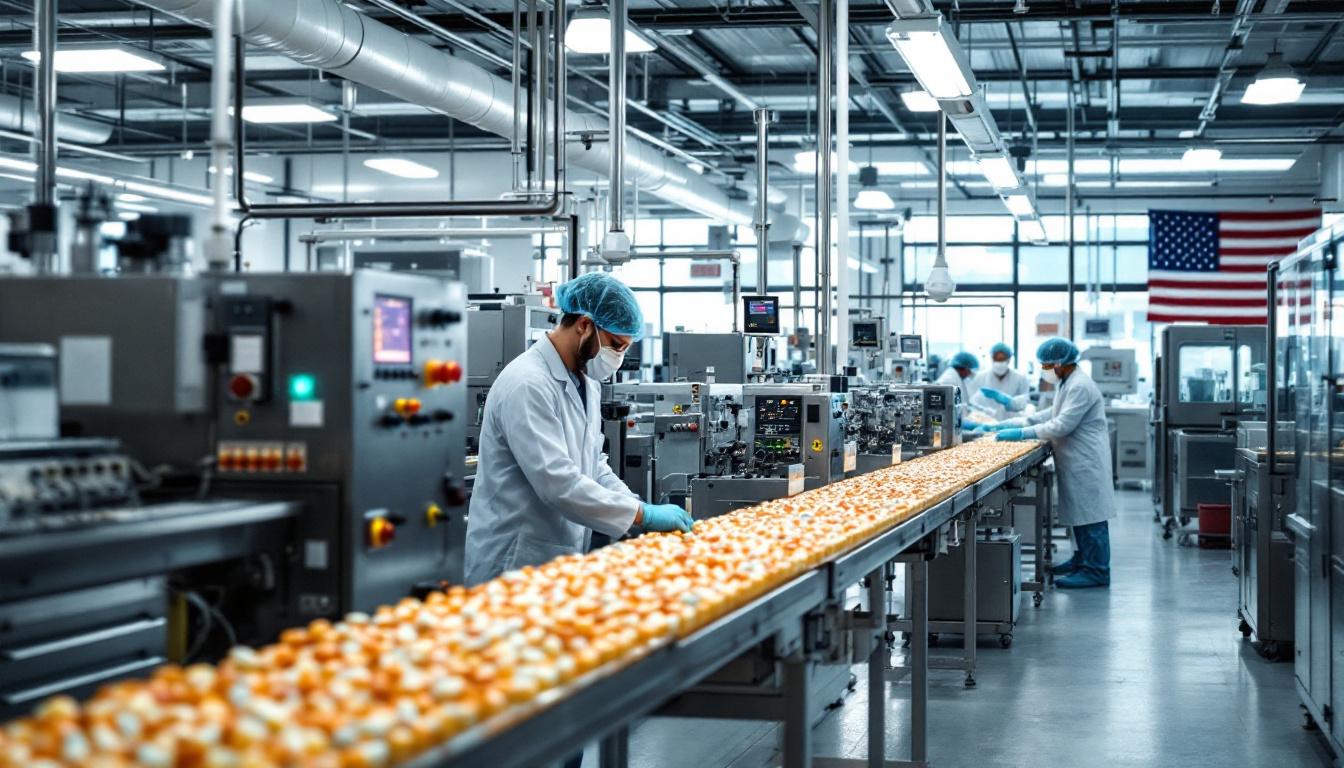
Here’s the deal, and it’s actually brilliant in its simplicity. Any pharmaceutical company that wants to avoid that 100% tariff has one option: sit down with the Commerce Department and HHS, commit to bringing manufacturing back to American soil, and agree to sell their products at most-favored-nation prices. Do that, and your tariff drops to zero. Don’t do it, and enjoy doubling the cost of every pill you try to import.
In other words, Trump gave Big Pharma a choice: build factories here and lower your prices, or go broke trying to import your way around it. That’s not protectionism — that’s common sense.
Let’s talk about why this matters, because the media is doing everything they can to make this sound like a disaster. Right now, America imports roughly 80% of the active pharmaceutical ingredients used in our medications from overseas — mostly from China and India. Eighty percent. The country that put a man on the moon and built the internet can’t manufacture its own aspirin without calling Beijing.
We found out the hard way during COVID what happens when your supply chain runs through countries that don’t particularly like you. Remember the PPE shortage? Remember when we couldn’t get basic medical supplies because China decided to keep them for themselves? That was a preview. Now imagine the same thing happens with heart medication, insulin, or cancer drugs. That’s not a hypothetical — that’s a national security crisis waiting to happen, and it’s exactly the kind of vulnerability that Section 232 was designed to address.
The tariffs on steel, aluminum, and copper got tightened up too — still at 50%, but with smarter enforcement. Products made entirely of these metals pay the full rate on their total value. Products that are substantially made of them pay 25%. And here’s the kicker that nobody’s talking about: if you make something overseas but use American steel, aluminum, or copper to do it, your tariff drops to 10%. That’s a direct incentive to buy American materials even if the final assembly happens somewhere else.
But it’s the pharmaceutical tariffs that have Washington’s lobbying class in full panic mode. These people have spent decades building a system where they manufacture drugs for pennies in countries with no labor standards, mark them up by 10,000%, and sell them back to American patients who have no choice but to pay. And now someone’s finally calling their bluff.
The predictable chorus has already started. “This will raise drug prices!” Really? Higher than what? Americans already pay more for prescription drugs than any other country on Earth. We’re subsidizing the entire planet’s pharmaceutical research while countries like Canada and Germany negotiate prices that are a fraction of what we pay. Trump’s tariff structure actually requires companies to offer most-favored-nation pricing as part of the deal. That means for the first time, American patients could pay the same prices that Europeans do.
Of course, the companies have until July 31st to get their agreements in place — longer if they’re already in negotiations. So nobody’s insulin is going up tomorrow, despite what MSNBC will tell you tonight. This is a structured timeline designed to give companies a clear path to compliance. The ones that play ball get rewarded. The ones that don’t get punished. That’s how you negotiate when you actually want results instead of just headlines.
The bigger picture here is that Trump is doing something no president in modern history has had the guts to do: he’s using America’s purchasing power as leverage to force industries to invest in American workers and American infrastructure. We’re the biggest pharmaceutical market in the world. We’re the biggest consumer of steel and aluminum in the Western Hemisphere. The idea that we should just let other countries take those jobs and those factories without any consequences was always insane — we just had a political class that was too bought-off to say so.
One year into the tariff era, the numbers are starting to tell the story. Steel production is up domestically. Aluminum smelters that were shuttered are reopening. And now pharmaceutical companies are being told that the free ride is over — if you want access to 330 million American customers, you’re going to employ American workers to make the product.
The left will scream. The lobbyists will lobby. The editorial boards will write very concerned opinion pieces about “trade disruption” and “market uncertainty.” But out here in the real world, where people work with their hands and pay their own pharmacy bills, this is exactly what we’ve been asking for.
Make it here or pay the price. It’s not complicated. It’s just that nobody had the spine to say it until now.