
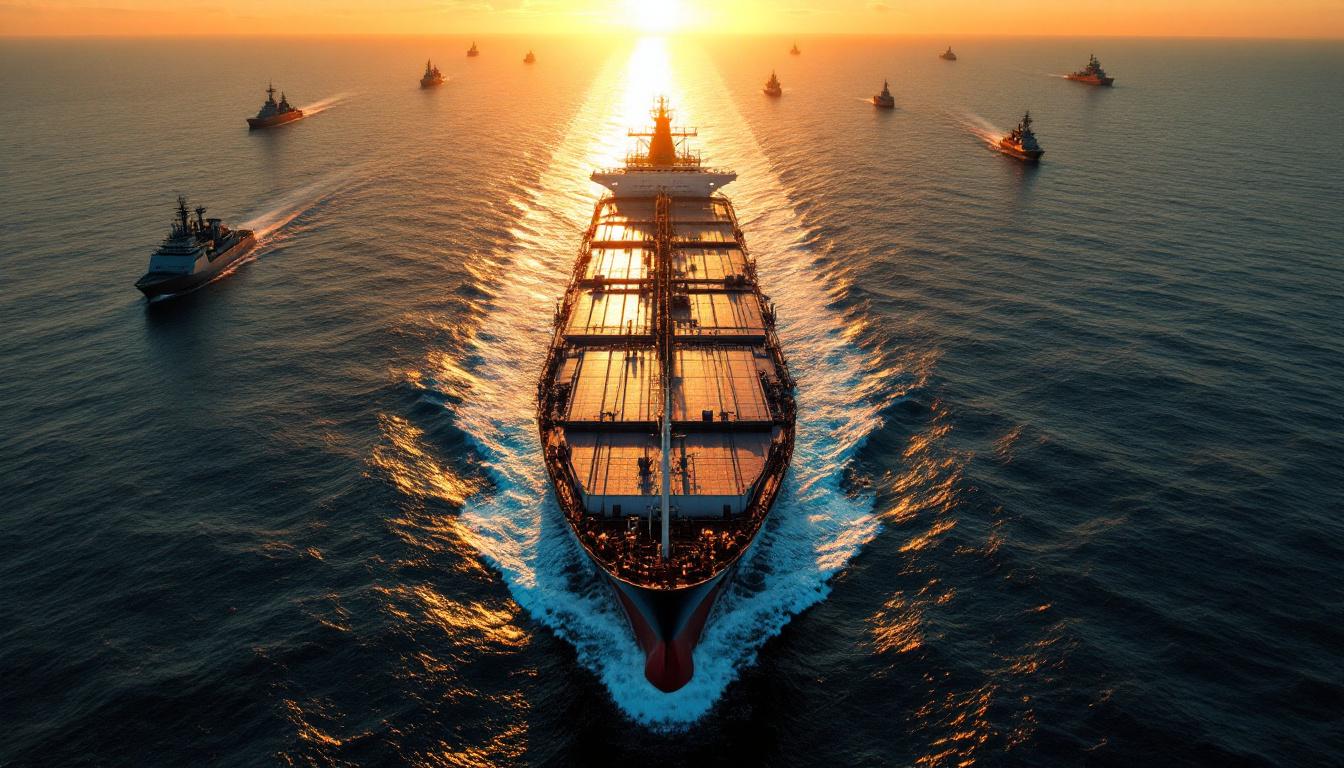
Iran agreed to a two-week ceasefire with the United States on Tuesday, reopened the Strait of Hormuz, and then spent the next twelve hours trying to weasel out of the deal because Israel kept bombing Hezbollah in Lebanon.
Shocking. A regime that chants “Death to America” every Friday turned out to be a difficult negotiating partner. Who could have predicted this?
Here’s what actually happened. Trump gave Iran a deadline: reopen the Strait of Hormuz or face consequences. He wasn’t subtle about it. He posted on social media that “a whole civilization will die tonight” if Iran didn’t comply. Foreign policy professionals clutched their pearls. Cable news analysts hyperventilated into paper bags. And then — ninety minutes before the deadline — Iran caved.
The Strait reopened. Tankers started moving. Oil prices dropped like a rock. The stock market celebrated. Pakistan’s Prime Minister Shehbaz Sharif — who brokered the deal — announced that everyone had agreed to “an immediate ceasefire everywhere, including Lebanon.”
Then Benjamin Netanyahu walked up to a microphone and said: nah.
Netanyahu made it crystal clear that the ceasefire with Iran does not extend to Israel’s operations against Hezbollah in Lebanon. Trump backed him up. When a reporter asked why Lebanon wasn’t included, Trump gave a two-sentence answer that was more coherent than anything the State Department has produced in four years: “Because of Hezbollah. They were not included in the deal. That’ll get taken care of too.”
And then Israel launched one of the biggest air campaigns of the entire conflict. Fifty fighter jets. A hundred and sixty munitions. Targets across Lebanon. The Lebanese health ministry reported 254 killed and over 1,100 wounded in a single day.
Iran immediately started crying foul. Their parliament speaker said the ceasefire was “unreasonable” because of Israel’s strikes. An Iranian news agency reported that tanker traffic through the Strait of Hormuz was being halted again. Iran’s foreign ministry accused Washington of violating the framework.
Pop quiz: If you agree to stop fighting the United States in exchange for not having your civilization destroyed, do you get to dictate what Israel does to the terrorist army you’ve been funding for decades?
The answer is no. And Iran knows it.
This is the part the media won’t frame properly. Iran wanted Lebanon included in the ceasefire because Hezbollah is Iran’s proxy. Hezbollah is Iran’s investment. Iran has spent billions arming, training, and directing Hezbollah to threaten Israel from the north. Now that Trump has Iran pinned down and Netanyahu is dismantling their pet project in Lebanon, Tehran wants a timeout.
Trump’s response? All U.S. military assets are staying in position. Every ship, every aircraft, every operator remains deployed around Iran until the ceasefire terms are fully complied with. If Iran pulls out of the deal, they’re right back where they started — staring down the barrel of the most powerful military on earth with an economy that’s already cratering.
VP Vance added a nice detail: Israel had actually offered to restrain its strikes in Lebanon during the negotiations. The implication being that Netanyahu showed good faith during the talks and then made his own sovereign decision about how to handle the terrorist organization on his northern border.
The media is framing this as a “fragile ceasefire” that’s “showing cracks.” What it actually is: Trump forced Iran to capitulate on the Strait, kept America’s military leverage fully intact, and let Israel handle the Hezbollah problem that Iran created. Three objectives, all advancing simultaneously.
Iran can whine all they want. They can threaten to close the Strait again. They can accuse Washington of violations and stomp their feet at the UN.
But we all saw what happened when Trump set a deadline. Iran blinked. And they’ll blink again.
That’s what happens when you negotiate with someone who means it.