
It wasn’t subtle. It wasn’t nuanced. It wasn’t even politically careful.
It sounded like a warning shot.
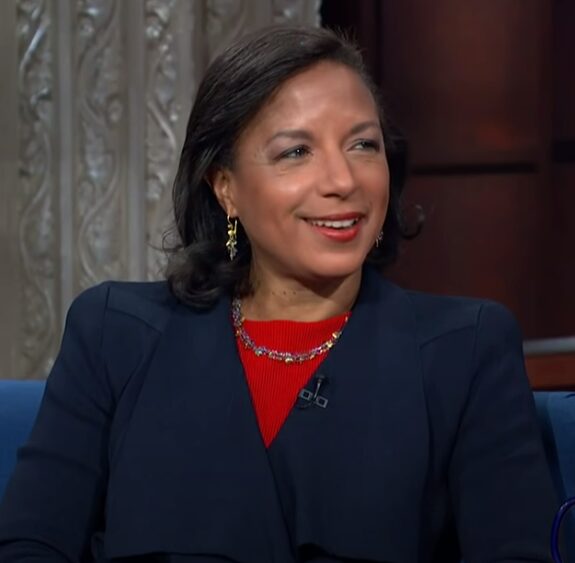
When former Obama adviser and current Netflix board member Susan Rice went on Preet Bharara’s podcast and warned corporations not to “take a knee to Trump,” she didn’t just wade into partisan waters — she detonated a political charge in the middle of Netflix’s most sensitive regulatory moment in years.
Rice openly suggested that companies cooperating with the Trump administration should “preserve their documents” and prepare for subpoenas once Democrats return to power. She promised an “accountability agenda.” She warned that corporations would be “caught with more than their pants down.”
That isn’t standard policy debate. That’s a political threat.
And the timing could not have been worse.
At that exact moment, Netflix was seeking Department of Justice approval for its massive bid to acquire Warner Bros. Discovery’s studio and streaming assets — a deal valued north of $80 billion. The DOJ, under Trump-appointed leadership, was already scrutinizing whether the merger would create antitrust concerns, particularly in streaming consolidation as competition with YouTube and other platforms intensifies.
Into that regulatory minefield walked Susan Rice with a lit match.
Within days, the Warner Bros. board declared Paramount Skydance’s competing bid “superior.” Netflix abruptly walked away, calling the deal “no longer financially attractive.” Behind the scenes, reports indicate regulatory pressure was mounting. Netflix CEO Ted Sarandos personally met with Attorney General Pam Bondi and DOJ officials in what amounted to a last-ditch charm offensive.
But here’s the obvious question shareholders should be asking: did Rice’s threats harden the administration’s posture?
One senior regulatory official reportedly joked that Sarandos should have “let Susan Rice tag along” to his DOJ meeting. Translation: good luck asking for regulatory goodwill after one of your own directors publicly threatens political retribution against the very people reviewing your merger.
President Trump responded bluntly on Truth Social, demanding Netflix fire “Trump Deranged Susan Rice, IMMEDIATELY, or pay the consequences.” Sarandos dismissed the controversy as politics unrelated to business. But in Washington, politics is business — especially when you need federal approval for an $80 billion transaction.
Corporate governance experts didn’t mince words. Charles Elson of the University of Delaware’s Weinberg Center for Corporate Governance called Rice’s behavior “poor judgment.” Directors are elected for judgment, not partisan grandstanding. Bradley Akubuiro of Bully Pulpit International warned that companies awaiting regulatory approval must understand when they are at “peak vulnerability.” Timing matters. Context matters.
And Rice chose that moment to escalate.
This episode also exposes a broader structural issue in Corporate America: the concentration of openly partisan political figures on major boards — overwhelmingly from the left. Fortune 100 CEO donation data shows many CEOs personally lean conservative. Yet at the board level, the high-profile political activists embedded in corporate governance roles — Susan Rice, Reid Hoffman, Valerie Jarrett — almost exclusively come from Democratic administrations.
Those appointments made sense during the ESG-and-DEI boom years, when signaling progressive alignment carried reputational currency. But in today’s political environment — where regulatory agencies are controlled by an administration Rice openly antagonizes — that same signaling becomes a liability.
Meanwhile, global competition in media and technology is fierce. Antitrust enforcement is tightening worldwide. The Biden-era DOJ aggressively challenged tech consolidation. The Trump DOJ has signaled it will scrutinize market concentration differently but no less seriously. In that climate, a director threatening political revenge while her company is under review isn’t bold — it’s reckless.
Netflix’s stock dipped following the controversy. The deal is dead. Paramount Skydance moves forward. And investors are left wondering whether ideology just cost them a generational acquisition.
Susan Rice built her career in government. That’s her lane. But a corporate boardroom is not a campaign rally. When a sitting director publicly threatens corporations for cooperating with a current administration, she doesn’t just speak for herself — she drags her company into the crossfire.