Last month, Reuters confirmed what many in Trump’s orbit had long suspected: the Biden-era FBI, operating under special counsel Jack Smith’s investigations, secretly obtained the phone records of both Kash Patel and Susie Wiles — two of the most important figures in Donald Trump’s administration — while they were private citizens working on his 2024 campaign.
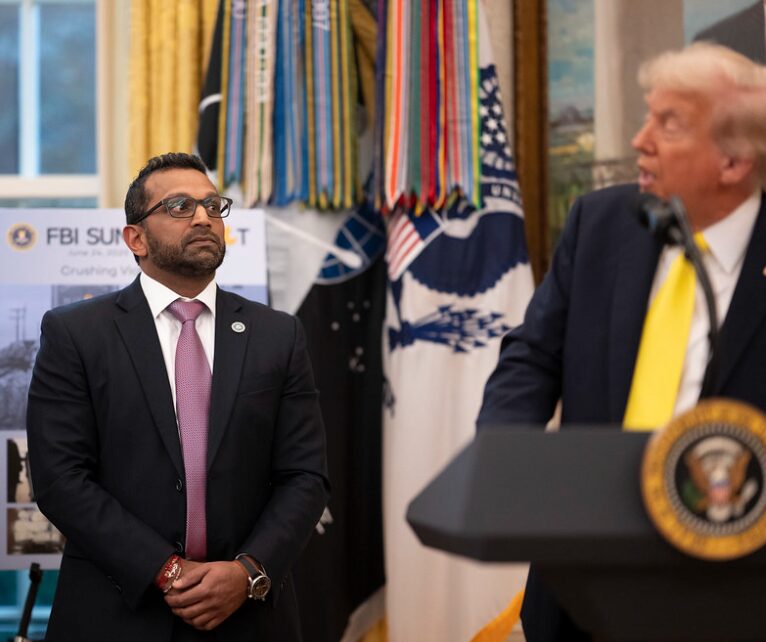
Susie Wiles was running that campaign. She is now the White House Chief of Staff. Kash Patel was a Trump adviser. He is now the Director of the FBI.
Wiles told associates she was “in shock” when she learned her phone records had been subpoenaed. Her connection to either the Mar-a-Lago classified documents case or Trump’s 2020 election challenges — the two investigations Jack Smith was running — was not clear. She was a campaign manager. The FBI obtained her call logs anyway.
Patel’s response upon learning the full scope of what had been done: he fired ten FBI employees connected to the surveillance operation within days of the story breaking. That was just the beginning.
The phone records story was the visible surface. What Patel found underneath it is far more significant.
Deep inside the FBI’s computer systems, investigators discovered what are now being called “ghost files” — a hidden category of records formally labeled “Prohibited Access” and stored in Sensitive Compartmented Information Facilities in a way deliberately designed to make them difficult to locate through standard searches. These files span at least 25 years of FBI operations across multiple administrations. They contain records of off-books surveillance activities, disruption operations, and case numbers tied to investigations that were never properly documented through official channels.
Senator Chuck Grassley, who has spent years pushing for FBI transparency, released declassified records corroborating the broader pattern — documenting how the FBI worked to co-opt intelligence briefings as far back as the 2016 Trump campaign to conduct surveillance under cover of official process.
The ghost file system operated without written rules. Without formal oversight structure. Without the accountability mechanisms that are supposed to govern how the most powerful domestic law enforcement agency in the world handles sensitive surveillance of American citizens. For a quarter century, it ran in the dark.
On March 3rd — days before the United States launched its military strikes against Iran — Patel fired an entire unit of the FBI’s counterintelligence division. A dozen agents and staff. Every one of them had been involved in the investigation of Trump’s alleged retention of classified documents at Mar-a-Lago. CNN broke the story and framed it as alarming. What CNN did not emphasize: these were the same agents whose work had now been connected to the off-books surveillance of Trump associates — and whose files were among those hidden in the prohibited-access system Patel had just uncovered.
Also newly confirmed: disgraced FBI lawyer Kevin Clinesmith — already convicted for falsifying evidence in the original Trump-Russia investigation — allegedly withheld exculpatory evidence that would have demolished the legal basis for surveilling Trump foreign policy adviser Walid Phares. The Russia hoax had layers. Kash Patel is now peeling them back one by one.
The agents who were terminated are now fighting back. Two filed a federal lawsuit this week claiming they were fired “solely” because of their roles in investigating Trump’s effort to challenge the 2020 election — calling it political retribution.
Consider what that argument actually concedes. They are not disputing the surveillance. They are not disputing the ghost files. They are not disputing that they obtained the phone records of Trump’s campaign manager and future FBI director without obvious legal justification. Their entire defense is that they were doing their jobs — which means they are publicly confirming, on the record in federal court, that surveilling Trump’s closest allies was their job.
Let that stand as its own answer.
For years, Trump and his allies were told they were paranoid. The surveillance was legal. The investigations were by the book. The FBI was an apolitical institution carrying out its lawful duties without fear or favor. Anyone who suggested otherwise was trafficking in conspiracy theories.
Kash Patel found the ghost files. He found the phone records. He found the hidden SCIFs and the off-books case numbers and the 25-year system that operated without written rules and without oversight. He fired the people responsible. And the people he fired responded by suing him — and in doing so, confirming in a federal complaint that yes, they were surveilling Donald Trump’s people, and they believe that was entirely appropriate.
The conspiracy theory is now a federal lawsuit filed by the conspirators.
Patel has said the firings are not finished. Based on what has already been found, that is easy to believe.